How to Plan Driveway Drainage That Lasts
20/11/2026

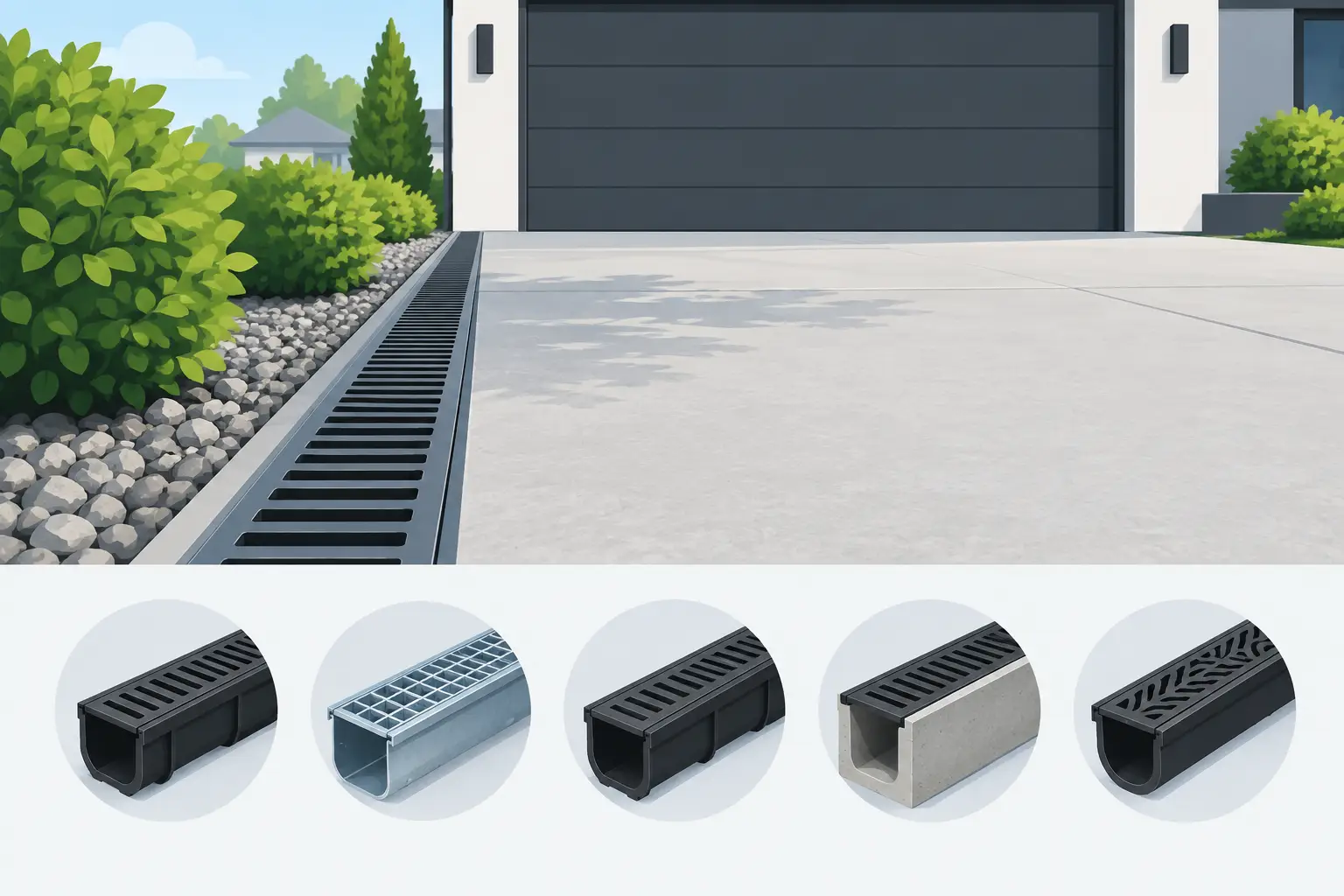
A driveway can look immaculate on the day it is laid, yet still cause costly problems if rainwater has nowhere reliable to go. Standing water at the garage, runoff across a pavement, loose blocks and slippery patches are all signs that drainage needs attention. The best drainage channels for driveways collect surface water at the right point, carry it safely to a suitable outlet and protect the surface structure beneath your wheels.
For homes across Leicester and the Midlands, the right choice is rarely just the most visible or least expensive channel. It depends on the slope of the drive, the amount of rainfall reaching it, the surface material, vehicle use and where the water can legally and practically discharge. A properly designed system should work quietly in the background through heavy rain, frost and everyday use.
A channel drain is a narrow linear run set into the driveway surface. Water falls into the opening, passes through the channel and is directed to a soakaway, drainage field or approved surface-water connection. It is especially useful where a driveway slopes towards a house, garage, pavement or neighbouring boundary.
Capacity matters, but it is not the only consideration. The channel must be installed at the correct level and fall, with a grate or slot that admits water without becoming a trap for leaves, grit and tyre debris. It also needs enough strength for the vehicles using the driveway. A lightweight domestic grate may suit a pedestrian path, but it is not automatically suitable at the entrance to a busy parking area.
The quality of the surrounding groundwork is equally important. Without a stable sub-base, firm bedding and concrete support where required, channels can settle or crack at the edges. This can leave a lip that catches tyres, disrupts water flow and spoils the finish of an otherwise well-built driveway.
Polymer concrete channels are a dependable choice for many residential driveways. They are rigid, hard-wearing and less prone to distortion than lighter plastic alternatives. Available with galvanised steel, cast iron or composite grates, they can be selected to complement block paving, tarmac, resin bound surfaces and concrete.
This type of channel is particularly well suited to driveway thresholds and garage entrances, where water needs to be intercepted before it reaches the building. The trade-off is that polymer concrete systems require careful cutting, bedding and alignment. They are not a fit-and-forget item pushed into a shallow trench. Professional installation gives them the support needed to withstand repeated vehicle loading.
High-quality plastic channels can be a practical solution for lighter domestic use. They are easier to handle, often more economical and available with clip-in grates for straightforward maintenance. When correctly specified with a suitable load rating and installed on a proper concrete bed, they can perform well on smaller driveways.
However, not all plastic drainage is equal. Lower-grade units can flex during installation or under vehicle weight, particularly where the driveway is regularly used by larger cars, vans or delivery vehicles. For this reason, the system should be chosen for the actual loading and not simply for the lowest initial cost.
Slot drainage has a narrow, continuous opening rather than a conventional visible grate. It provides a clean, contemporary appearance and is popular alongside resin bound driveways, porcelain paving and modern architectural finishes. The slim opening can collect water effectively while keeping the drainage line far less noticeable.
It is an attractive option, but it needs accurate levels. A slot that sits too high will allow water to bypass it, while one installed too low can create an awkward edge or collect debris. Access for cleaning should also be planned from the outset, especially beneath trees or beside garden beds where leaves and soil are likely to build up.
Where appearance is a priority, a standard channel body can be finished with a decorative grate in stainless steel, galvanised metal or a coloured composite material. This is often the best route for period-style block paving, cobbles and natural stone, where a plain plastic grate may look out of place.
The visible finish should never take priority over strength or drainage capacity. A grate must be rated for driveway traffic, seated securely and selected with openings that are fine enough to prevent large debris entering while still allowing rainwater through freely.
Commercial forecourts, parking areas for flats, farm entrances and shared driveways may need a more substantial drainage solution. Heavy-duty channel bodies and grates are designed for higher wheel loads, more frequent traffic and larger volumes of runoff. Cast iron grates and concrete-supported channels are common where durability is the overriding requirement.
Load classifications can be confusing, so they should be assessed as part of the wider design. A channel appropriate for pedestrian use is not sufficient for cars, and a drive used by trade vehicles or regular delivery lorries may need a higher-duty specification than a standard private entrance. Choosing the right class at the start is far less expensive than replacing cracked channels later.
The most common position is across the driveway immediately in front of a garage, doorway or boundary line. This intercepts water before it reaches the building or escapes onto the public footway. On a sloping drive, the channel is usually placed across the natural route of the water, not merely where it looks most convenient.
Some properties need more than one run. A long driveway that falls towards the house may benefit from a channel near the entrance and a second intercepting line before the garage. Areas beside retaining walls, patios and gates can also require drainage where water is likely to collect. The goal is to manage the whole surface, rather than treating one puddle while allowing runoff to move elsewhere.
Drainage channels should lead to a suitable destination. For many homes, this means a soakaway sized for the ground conditions and runoff area. Permeable surfaces, including correctly constructed permeable block paving and resin bound systems, can also help water drain through the surface. Surface water should not be directed into the foul drain, and discharge arrangements must be considered carefully where work affects the front of a property or public highway.
A tarmac driveway can be finished neatly around a channel when the edges are well restrained, preventing the material from breaking away. With block paving, the channel line needs to sit accurately within the laying pattern, and the adjacent blocks should be fully supported to prevent movement. Resin bound surfaces require meticulous preparation and clean edges, as poor detailing is highly visible once the resin has cured.
Concrete and pattern-imprinted concrete can accommodate channels effectively, but joint placement and falls need planning before the pour. Natural stone and cobble driveways call for additional care because uneven unit sizes and traditional finishes can make a drainage run look intrusive if it is not set out properly. The most successful installations make the channel appear intentional, not added as an afterthought.
A channel drainage system only works as well as the groundwork beneath it. The excavation must be deep enough for the channel, bedding, concrete support and finished surface layers. The channel should follow a controlled fall towards its outlet, with joints sealed where the system requires it.
Each grate should sit flush with, or very slightly below, the finished driveway level so water naturally enters it. If the grate is proud of the surface, tyres may strike it and water can pass around it. If it is set too low, it can become a collection point for dirt and create a trip hazard near access doors.
Maintenance is simple but worthwhile. Lift the grates periodically, remove silt, leaves and gravel, and check that the outlet is clear. This is particularly valuable after autumn leaf fall and after intense rain. Regular clearing helps a correctly installed channel continue to protect the driveway for years.
The best result comes from planning drainage before the surfacing work begins. This allows the driveway falls, channel position, edging, sub-base and outlet to work as one system rather than competing with each other. It also gives you more freedom to choose a grate or slot detail that suits the character of the property.
Leicester Driveway can assess the levels, surface choice and drainage requirements together, whether the project involves block paving, tarmac, resin bound surfacing or a complete exterior transformation. Request a quote before water damage becomes the reason for replacing a driveway that should have lasted far longer.