How to Plan Driveway Drainage That Lasts
20/11/2026

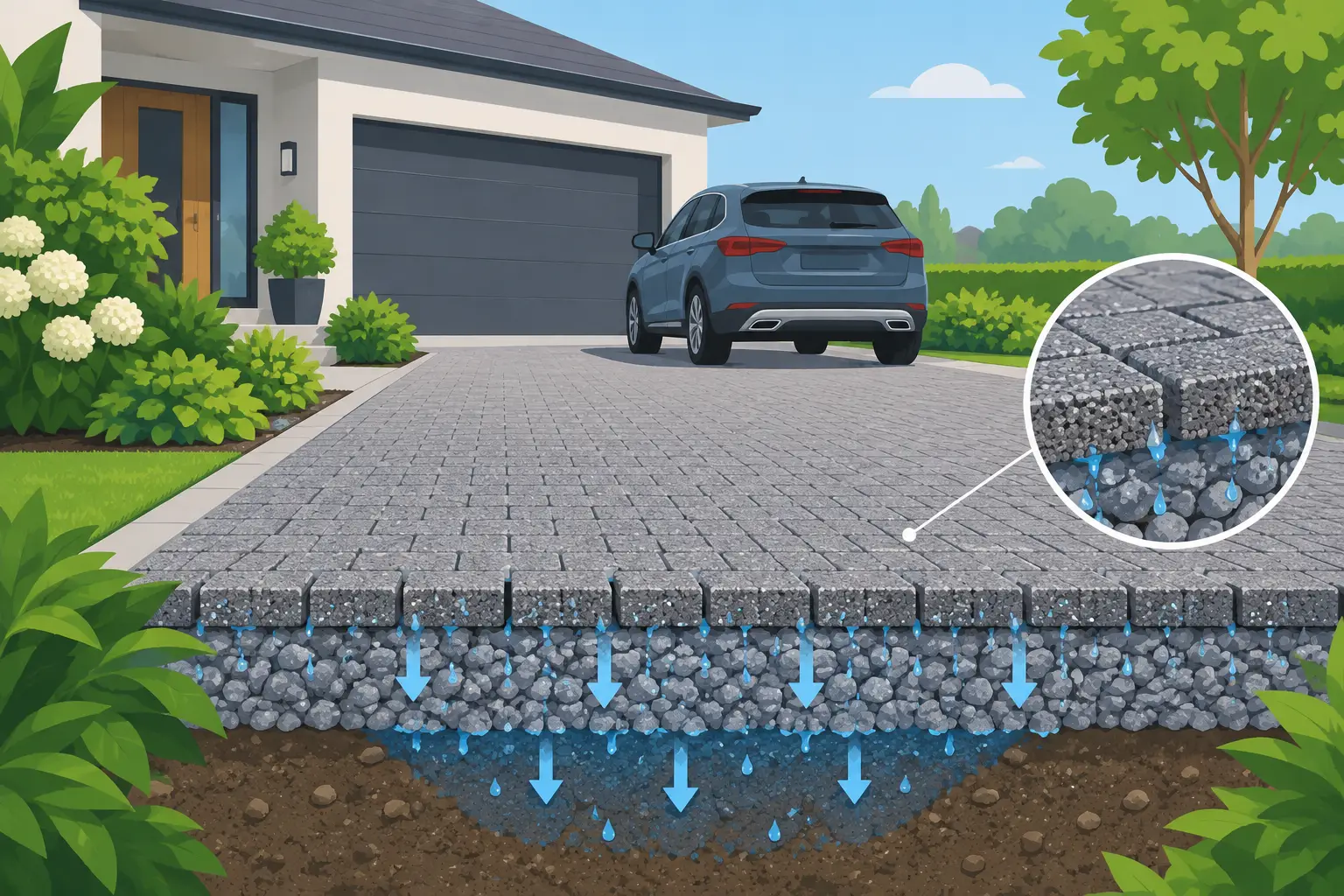
A driveway should do more than provide a place to park. In the Midlands, where heavy downpours can quickly expose weak drainage, permeable driveway paving gives rainwater somewhere useful to go rather than allowing it to sit on the surface, run towards the house or overwhelm nearby drains. Done properly, it creates a smart, hard-wearing entrance while helping to manage water at ground level.
For homeowners replacing an ageing tarmac drive, cracked concrete or puddle-prone block paving, permeability can be a practical upgrade rather than an added extra. The key is choosing the right surface and ensuring the foundation beneath it is designed and installed for the ground conditions, traffic and drainage requirements of the property.
Permeable paving is a driveway construction system that allows surface water to pass through the finished surface or through carefully formed joints. Instead of directing rainwater straight into gullies and drains, water filters down through layers of clean, open-graded aggregate beneath the driveway. It is then stored temporarily in the sub-base before soaking into the ground or being released in a controlled way.
This is very different from simply laying paving blocks with gaps between them. A permeable driveway needs a complete drainage structure. The jointing material, bedding layer, sub-base and edge restraints all have a role in keeping the surface stable while allowing water to move freely.
When the system is designed well, the result is a driveway that looks finished and substantial, stands up to regular vehicle use and reduces the risk of standing water. It can be particularly valuable on properties where the existing drive slopes towards the garage, front door or public pavement.
Many older driveways were built as solid, impermeable surfaces with little thought given to where rainwater would go. Over time, blocked channels, uneven settlement and worn edges can lead to puddles, splashback and water collecting against walls. In colder weather, standing water may freeze and create a slip risk.
There is also a planning consideration. In England, new or replacement driveways over five square metres at the front of a property generally need to drain to a permeable area within the boundary. If this cannot be achieved, planning permission may be required. A permeable surface can often provide a straightforward solution, but every site needs assessing on its own merits.
Soil type, the level of the driveway, nearby trees, existing drainage runs and the location of the house all matter. Clay-heavy ground, which is common in parts of Leicestershire, may not let water soak away as quickly as sandy ground. That does not automatically rule out permeable paving, but it may mean the design needs additional drainage measures or a controlled outlet.
There is no single best material for every home. The right choice depends on the style of the property, the amount of traffic the drive receives, the available budget and how much design flexibility you want.
Permeable block paving is one of the most versatile choices for residential driveways. The blocks are designed with wider joints or spacer nibs, allowing water to pass between them into the aggregate layers below. They are available in a broad range of colours, sizes and laying patterns, making it possible to complement traditional brickwork, modern render or period properties.
This option is well suited to homeowners who want defined borders, contrasting details or a driveway that links naturally with paths and patios. Individual blocks can also be lifted and replaced if a future repair is needed. The trade-off is that the joints need to be kept clear of silt and debris to preserve drainage performance.
A resin-bound driveway combines dried natural aggregate with a clear resin binder. The mixed material is hand-trowelled over a suitable porous base to create a smooth, decorative finish with small gaps between the stones. Water can pass through the surface, provided the layers beneath it are also permeable.
Resin-bound surfacing offers a clean, contemporary appearance and is comfortable underfoot, making it a strong option where a driveway and front path are part of the same design. It is not the same as resin-bonded surfacing, where loose aggregate is scattered onto resin applied to a base. Resin-bonded finishes are attractive but are generally not permeable in the same way.
A resin-bound driveway needs careful preparation, dry installation conditions and a stable base. Installing it over a cracked or poorly drained surface is likely to lead to disappointing results, no matter how good the finished aggregate looks on day one.
Loose gravel can be naturally permeable and is often a cost-effective choice for long rural drives or larger frontages. It suits properties that benefit from a softer, traditional appearance, particularly when paired with natural stone edging or walls. However, gravel can migrate under tyres and foot traffic, and it needs regular raking and topping up.
Gravel grids improve stability by holding the stone in place while maintaining drainage. Natural stone setts and cobbles can also form part of a permeable design, although the correct jointing and sub-base specification remain essential. These materials can be especially effective for character properties, but labour costs are often higher due to the detailed installation work involved.
The visible surface gets most of the attention, but the sub-base is where a permeable driveway succeeds or fails. A conventional sub-base may use fine particles that compact tightly and restrict water flow. Permeable construction uses clean, angular aggregate with voids between the stones, creating strength while allowing water to move and be stored.
The excavation depth must be matched to the expected load. A driveway used by one family car has different requirements from a commercial forecourt, shared access route or property where vans regularly park. Weak foundations can lead to rutting, uneven settlement and failed edges, while insufficient falls or poor detailing can direct water to the wrong place.
A professional installation should also include suitable edge restraints. These keep blocks, gravel or other surface materials securely contained as vehicles turn and brake. Geotextile membranes may be used where ground conditions require separation between the soil and aggregate layers, helping to prevent fine material from migrating upwards and clogging the system.
Permeable paving is low maintenance, not no maintenance. Leaves, soil and road debris can gradually build up on the surface and in the joints, particularly beneath trees or near busy roads. Regular sweeping is a simple way to reduce this risk.
For block paving, occasional brushing with the correct jointing aggregate can help maintain stability and drainage. Resin-bound surfaces benefit from gentle cleaning to remove dirt and organic growth, avoiding harsh methods that could damage the finish. Any oil spill should be dealt with promptly, as it can stain the surface and interfere with permeability.
Avoid filling joints with ordinary sand, sealing a permeable surface with an unsuitable coating or allowing soil from adjacent beds to wash across the driveway. These shortcuts can block the drainage route that the system was installed to provide.
Permeable paving can cost more initially than a basic impermeable surface because of the specialist aggregate layers and site preparation involved. However, the value is in the complete result: better water management, fewer puddles, a safer entrance and a driveway designed for long-term use.
It can also reduce the need for prominent drainage channels and extensive pipework, depending on the site. For homeowners improving kerb appeal before selling, a well-designed permeable drive can make the front of a property feel more orderly, spacious and cared for. For commercial sites, it can support a more professional first impression while dealing with rainwater responsibly.
The best approach is not to select a surface from photographs alone. Consider how water currently behaves on your property, how the driveway will be used and what finish suits the building. Leicester Driveway can assess these details and recommend a paving and drainage solution built around your home, rather than forcing a standard design onto every site.
A well-built driveway should look just as convincing after a wet November week as it does on installation day. Choosing a permeable system with the right groundwork gives you a practical route to a cleaner, drier and more attractive entrance for years to come.