Tarmac Driveway Resurfacing Leicester Explained
25/10/2026

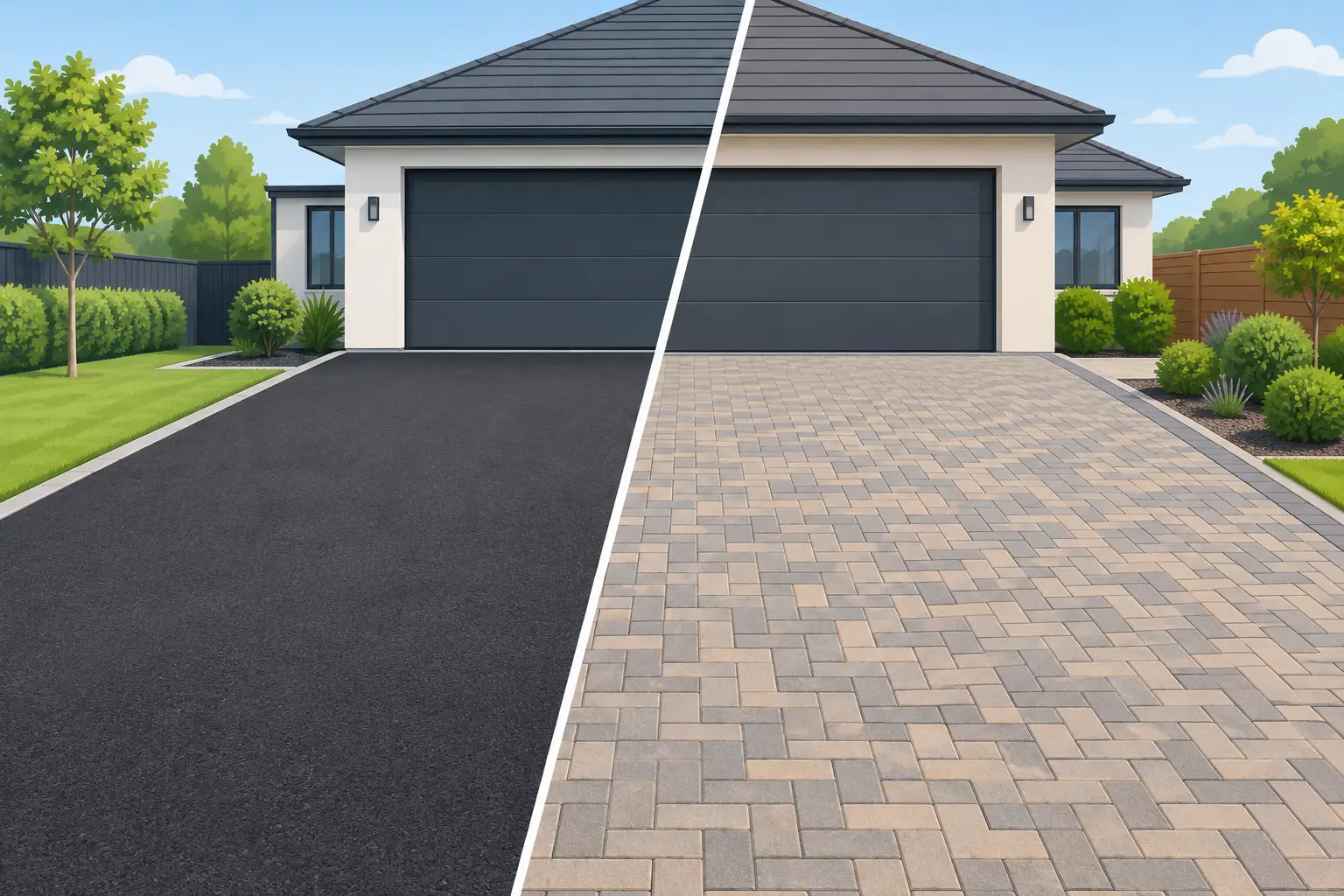
A driveway has a demanding job. It carries cars every day, deals with standing water, tyre marks, frost and summer heat, and forms the first impression of your home. When weighing up tarmac vs block paving, the right answer comes down to how you use the space, the look you want and the condition of the ground beneath it.
Both surfaces can provide years of dependable service when they are designed and installed properly. However, they achieve very different results. Tarmac is clean, practical and particularly effective over larger areas. Block paving offers greater design freedom, a more detailed finish and straightforward localised repairs. Understanding those differences before work begins helps you invest in a driveway that suits your property rather than simply choosing the lowest initial price.
Tarmac is a bound surface made from aggregate and bitumen, laid hot and compacted to create a smooth, continuous finish. It is familiar on roads, car parks and driveways because it is hard-wearing, quick to lay and capable of covering substantial areas efficiently. A new tarmac driveway can look smart and understated, particularly when finished with neat block-paved edging.
Block paving is made from individual concrete or clay blocks laid in a chosen pattern over a carefully prepared sub-base and bedding layer. It offers a wide choice of colours, sizes, laying styles and borders. From a traditional brindle herringbone driveway to contemporary charcoal blocks with a contrasting border, it can be tailored closely to the character of the property.
Neither material is automatically better. A busy family driveway, a long rural access route, a compact front garden and a customer-facing business forecourt all place different demands on the finished surface.
For homeowners looking to make a visible change to the front of their property, block paving generally offers more scope. The pattern can guide the eye towards the entrance, define parking bays and complement brickwork, render, fencing or garden walls. Borders can give the driveway a crisp, finished edge, while circles, feature panels and contrasting colours can be used sparingly to create a more bespoke design.
This flexibility makes block paving a strong option where kerb appeal and property presentation are high priorities. It can also work well when a driveway needs to connect naturally with a patio, path, steps or boundary wall as part of a wider landscaping project.
Tarmac creates a different type of finish. Its smooth, dark appearance is simple, purposeful and tidy. It is often the better visual choice for larger driveways where an intricate block pattern may feel overly busy or add significantly to the cost. Edging tarmac with block paving, granite setts or kerbs can add definition and lift the overall appearance without losing the practical benefits of the surface.
The performance of either surface depends far more on what lies underneath than on the material visible at the top. A driveway needs excavation to the correct depth, a stable and compacted sub-base, suitable edging and falls that direct water away from the property. Skipping these stages can lead to movement, rutting, pooling water and premature cracking.
For tarmac, a strong foundation is essential because the finished surface is continuous. If the base moves, the tarmac above may crack or dip. The material must also be laid at the correct temperature and compacted professionally to achieve an even, durable finish.
With block paving, the sub-base and edge restraints are equally important. Individual blocks can only stay level if the foundations are stable and the perimeter is securely retained. Correct jointing sand and final compaction help lock the paving together so it can withstand repeated vehicle use.
At Leicester Driveway, the surface is selected only after considering access, existing ground levels, vehicle loading and drainage requirements. This groundwork-led approach is particularly valuable across Leicester and the wider Midlands, where older driveways, uneven sites and variable soil conditions are common.
A driveway should not send surface water towards your house, garage or neighbouring land. Drainage needs to be considered at the design stage, not after the first heavy downpour reveals a problem.
Standard tarmac is impermeable, so water runs across its surface. This is not a weakness when the driveway has correctly formed falls and suitable drainage channels or gullies. In fact, a well-designed tarmac surface can move water efficiently away from high-traffic areas. Permeable tarmac systems are also available for appropriate applications, though they require a specifically designed permeable sub-base.
Block paving can be installed as a conventional system with drainage provision, or as permeable block paving. In a permeable driveway, water passes through the joints and into layers beneath, where it is stored or allowed to drain gradually. This can be useful where managing surface water on site is a key consideration.
The most suitable drainage arrangement depends on the site. Ground conditions, existing drainage, driveway slope and local planning requirements all need to be assessed. A professional survey avoids relying on assumptions and ensures the new driveway performs properly through wet weather.
Tarmac is valued for its ability to handle regular vehicle traffic. It is a practical choice for larger driveways, commercial entrances and areas used by several vehicles, particularly when a tough, low-fuss finish is required. It has enough flexibility to cope well with minor ground movement, although heavy point loads, poor foundations and sharp turning from stationary wheels can still cause damage over time.
Block paving is also highly durable when installed on a suitable base. The interlocking pattern distributes vehicle weight across the surface, making it well suited to domestic driveways. Herringbone patterns are especially popular in parking areas because they provide excellent strength under tyres.
In both cases, lifespan is affected by use. A driveway that occasionally carries a family car is different from one used by vans, delivery vehicles or a heavy motorhome. It is always worth explaining how the area will be used before agreeing a specification. A stronger sub-base or adjusted surface design at the start can prevent costly problems later.
Tarmac is relatively simple to maintain. Regular sweeping, clearing leaves from drainage points and dealing with oil spills promptly will help keep it presentable. Over the years, the colour may soften from deep black to grey as the surface weathers. Small cracks can sometimes be repaired, while worn surfaces may be renewed through professional resurfacing where the underlying foundation remains sound.
The main advantage of block paving is repairability. If a small section sinks because of a disturbed drain or an isolated issue beneath the driveway, the affected blocks can usually be lifted, the base corrected and the paving relaid. There is no need to replace the entire surface. Spare blocks from the original installation are useful, as colours can weather and vary between batches.
Block paving requires more routine attention to keep it looking its best. Joints may need topping up with kiln-dried sand, and occasional weeds can emerge where wind-blown seeds settle in joints. This does not mean the paving has failed, but it should be maintained. Gentle cleaning and sensible weed treatment are usually enough. Aggressive pressure washing can dislodge jointing sand or damage the surface if used incorrectly.
Tarmac is often more cost-effective per square metre, especially for broad, uncomplicated areas. Its quicker installation process can reduce labour time, making it an attractive solution for long driveways, private roads and commercial spaces.
Block paving usually has a higher initial cost because each block is laid individually and the design often includes borders, cuts and detailed preparation. The final price also varies with the chosen block range, pattern, driveway shape, access and drainage requirements.
The best value is not always the cheapest quote. A low figure that omits excavation depth, waste removal, drainage, edging or proper compaction can leave the customer paying twice. A clear quotation should explain the preparation work as well as the visible finish, so you can compare like for like.
Choose tarmac if you want a clean, durable driveway with a practical finish, especially over a large area or where regular vehicle traffic is expected. It is also a sensible choice when you want to keep the design simple while adding visual definition through quality edging.
Choose block paving if you want a more decorative driveway with colour, pattern and borders that reflect the style of your home. It is particularly effective for front-of-property transformations, smaller to medium-sized parking areas and projects where the driveway will link with paths, patios or garden features.
There is also a middle ground. Many successful driveway designs use tarmac for the main parking area and block paving for borders, aprons and pathways. This combination provides the scale and practicality of tarmac with the character and detail of paving.
A good driveway should feel right every time you pull in – level underfoot, easy to use in wet weather and finished with the care your property deserves. Request a professional quote based on your site, not a one-size-fits-all estimate, and you will be in a far stronger position to choose with confidence.