How to Fix Driveway Drainage Problems for Good
02/11/2026

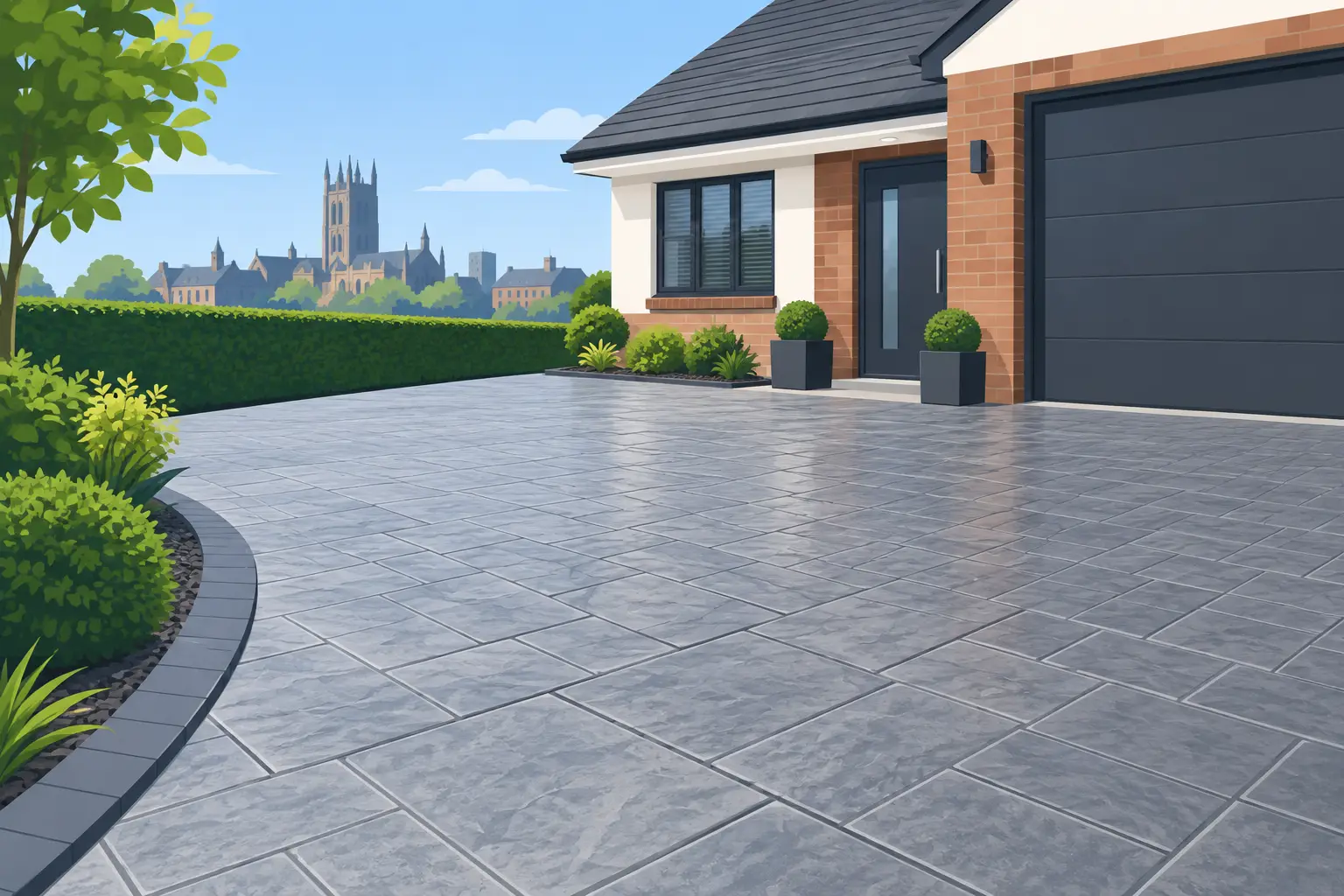
A driveway should do more than provide somewhere to park. It should carry daily vehicle traffic without looking tired, direct rainwater responsibly and give the front of your property a finish that feels considered. Pattern imprinted concrete driveways Leicester homeowners choose can achieve all three, creating the appearance of natural stone, slate, cobbles or paving while providing a continuous, professionally installed surface.
For many properties across Leicester and the wider Midlands, this is a particularly practical choice. It provides a decorative result without individual blocks that can move, settle or encourage weeds between joints. However, the lasting quality of pattern-imprinted concrete depends far more on the groundwork and installation process than the chosen pattern alone.
Pattern-imprinted concrete, sometimes called stamped concrete, is a coloured concrete surface pressed with specialist mats while the material is at the correct stage of curing. The mats leave a detailed impression that can replicate a wide range of traditional materials, from ashlar stone and London cobbles to slate and timber-effect finishes.
Unlike block paving, the pattern is formed into one continuous slab. Colour hardeners, release agents and sealers are used to build depth and definition, so the finished driveway does not simply look like plain grey concrete with a texture added on top. With the right combination of colour, border detail and pattern, it can suit both period homes and more modern developments.
The visual options are a major attraction, but this is not just a decorative surface. A correctly specified imprinted concrete driveway is designed as a hard-wearing parking area. It needs a stable sub-base, suitable reinforcement, properly planned falls and controlled joints before the concrete is even poured.
The first advantage is a clean, unified appearance. Because there are no separate paving units, there are no loose blocks to rebed or open joints to refill. That makes pattern-imprinted concrete a strong option for homeowners who want the character of traditional paving with a lower-maintenance surface.
It is also highly adaptable in design. A driveway can include a contrasting border around the parking area, a feature apron at the entrance, curved edges or a coordinated path leading to the front door. These details help the finished space look proportionate to the property rather than like a standard rectangle of hardstanding.
For busy households, maintenance is straightforward. Sweeping away leaves, washing the surface when required and resealing it at suitable intervals will help retain the colour and protective finish. Resealing is not an optional cosmetic extra. It helps preserve the surface against weathering, vehicle marks and moisture, while restoring the richer appearance that makes the pattern stand out.
There are trade-offs to consider. Pattern-imprinted concrete is not generally a surface that can be invisibly patched if it is damaged by major movement or excavation. The design and build must therefore be right from the beginning. It is also less suitable where a fully permeable surface is required, as rainwater management must be dealt with through drainage design rather than the paving itself.
Leicester properties vary considerably, from compact Victorian frontages and suburban family homes to larger rural plots with generous parking areas. The ground beneath the driveway, the existing levels and the route rainwater naturally takes all influence the specification.
A professional installation begins by assessing the site. Existing surfacing is removed, excavation levels are established and the ground is prepared for a stable sub-base. The depth required will depend on soil conditions, the planned use of the area and whether cars, vans or heavier vehicles will regularly use the surface.
The sub-base is installed and compacted in layers to create a reliable foundation. This is the stage that prevents the surface above from suffering the consequences of poor ground support. Skimping here may reduce the initial cost, but it can lead to settlement, cracking and drainage problems that are far more expensive to address later.
Formwork then defines the driveway edges and levels. Reinforcement may be incorporated where appropriate, particularly for larger areas or locations expected to take greater loading. The concrete is poured, levelled, coloured and imprinted within a carefully managed working period. Timing matters: stamp too early and the finish can lose definition; too late and the pattern will not transfer properly.
Control joints are also planned into the surface. Concrete naturally responds to changes in temperature and moisture, so joints provide controlled locations for movement. They are part of a sound installation, not a sign that corners have been cut. Thoughtful positioning helps them work effectively without spoiling the overall pattern.
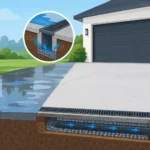
Surface water should not be allowed to run towards the house, neighbouring land or directly onto the public highway. The driveway needs carefully calculated falls that guide rainwater to a suitable drainage point. Depending on the site, this may involve channel drainage, a soakaway or another compliant drainage solution.
This is especially important on driveways with a continuous concrete finish. Unlike permeable block paving or certain resin-bound systems, water does not pass through the surface. A good contractor will assess levels before work starts and make drainage part of the design, rather than attempting to add it once the driveway is complete.
Where a property has wider exterior requirements, it can make sense to coordinate the driveway with patio paving, retaining walls, paths, fencing or landscaping. Managing the whole layout together helps ensure levels, edges and water run-off work as one finished scheme.
A pattern should complement the building rather than compete with it. Small, detailed cobble patterns can work well on modest frontages and traditional properties, while larger ashlar stone or slate effects often suit broader driveway areas. Borders are useful for defining parking bays, framing the surface or tying in brickwork around the property.
Colour deserves the same practical thought. Mid and darker tones can be forgiving around tyre marks and everyday use, whereas very pale finishes may need more frequent cleaning to keep their fresh appearance. That does not mean lighter colours should be avoided – they can look excellent against darker brickwork – but expectations should be realistic.
Samples and previous installation examples are valuable when selecting a finish. The colour seen in bright daylight, under shade and after rainfall can differ considerably. A tailored recommendation should take account of the house exterior, driveway size and how the area will be used day to day.
It is an excellent choice when you want a distinctive, low-joint driveway with the visual character of stone or paving. It works particularly well for homeowners looking to improve kerb appeal without the regular joint maintenance associated with some modular surfaces.
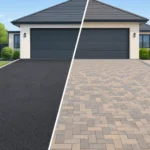
It may not be the best option in every situation. If permeability is the main priority, a resin-bound permeable system or permeable paving may be more suitable. If only a small section requires repair in future, block paving can offer more flexibility because individual units can be lifted and replaced. The right material depends on drainage requirements, budget, existing ground conditions and the finish you want to live with for years.
At Leicester Driveway, every project is approached as a complete exterior improvement, with attention given to design, drainage, groundwork and the final visual detail. A well-built imprinted concrete driveway is not simply poured concrete with a pattern. It is a carefully prepared surface that can make arriving home feel better every day. Request a quote to discuss your property, preferred finish and the practical details that will give your new driveway lasting value.