How to Choose Driveway Materials That Last
18/11/2026

A driveway can look tired long before it has fully failed. Loose blocks, standing water after rain, cracked tarmac or edges that are beginning to break away are all signs that need proper attention. Searches for driveway repair contractors Leicester homeowners can rely on should lead to more than a quick patch. The right contractor identifies why the surface has deteriorated, repairs the underlying issue and leaves a finish that is safe, attractive and built for daily use.
For Leicester properties, repair work often comes down to drainage, ground movement, vehicle loads and the age of the original installation. A well-planned repair can extend the life of an existing driveway considerably. In other cases, widespread defects mean resurfacing or replacement represents better value than repeatedly fixing the same problem.
Not every mark on a driveway requires major work. Light surface staining, small areas of moss or a few loose jointing granules can usually be dealt with through cleaning and routine maintenance. However, movement in the surface or recurring water problems should be assessed by an experienced paving contractor.
Sunken areas are a common concern. They can form where the sub-base was not properly compacted, where drainage has washed material away, or where the driveway is regularly carrying heavier vehicles than it was designed for. On block paving, this may show as a dip, rocking blocks or widening joints. On tarmac, it may appear as a depression that holds water. With concrete, cracking around a low spot can indicate movement below the slab rather than a purely cosmetic flaw.
Cracks also need to be judged by their cause and extent. A single fine crack in an older concrete drive may be manageable, while several spreading cracks, crumbling edges or broken sections suggest a more substantial repair is needed. Tarmac that has become brittle, rutted or uneven may benefit from resurfacing, provided the foundations remain sound.
Water should never be ignored. Puddles may seem like a minor inconvenience, but persistent standing water can speed up surface deterioration, make paths slippery and direct moisture towards the property. Correcting falls, adding suitable drainage or rebuilding a localised area can protect both the driveway and the surrounding ground.
A reliable survey starts below the visible surface. A contractor should inspect the condition of the existing driveway, identify areas of movement and assess whether rainwater is draining correctly. They should also consider access, the slope of the site, parking requirements and whether the surface needs to accommodate family cars, vans or frequent deliveries.
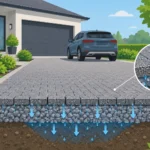
The sub-base is particularly important. It is the compacted layer beneath the finished surface that carries the load. If this foundation has failed, simply relaying blocks or applying a thin surface treatment will not create a durable result. The affected section may need to be excavated, rebuilt with an appropriate aggregate base and compacted before the chosen finish is reinstated.
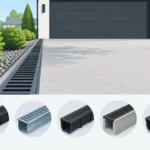
Drainage requires the same practical approach. Leicester weather brings regular rain and occasional heavy downpours, so a driveway must shed water in a controlled way. Depending on the site, the solution may involve adjusting levels, installing channel drainage, using permeable paving or directing water to a suitable soakaway. The best choice depends on the ground conditions, layout and local drainage requirements.
A professional should explain these findings in straightforward terms. You should understand whether the repair is localised, whether adjoining areas are likely to move later and what preparation is included in the quotation.
The right repair method depends on the material already in place and the condition of its base. Good workmanship is not about forcing every driveway into the same solution. It is about matching the repair to the problem.
One of the benefits of block paving is that damaged or sunken sections can often be lifted and repaired without replacing the entire driveway. The contractor removes the affected blocks, corrects the sub-base and bedding layer, then relays the blocks at the right level. Replacement blocks can be introduced where individual units are chipped, stained or cracked, although an exact colour match may not always be possible on older paving.
Once relaid, the blocks need proper edge restraint and fresh kiln-dried sand brushed into the joints. This helps lock the paving together and reduces movement. If the driveway has widespread dips or loose edging, a larger rebuild may be more sensible than several isolated repairs.
Small potholes, edge damage and local cracking in tarmac can often be cut out and repaired. The damaged material is removed, the base is checked and repaired where necessary, and new tarmac is laid and compacted. The quality of the join matters, particularly where water could otherwise work into the seam.
Where the tarmac surface is worn across a larger area but the foundations remain stable, resurfacing can give the driveway a fresh, even finish. If there are deep ruts, major settlement or repeated cracking, the base should be rebuilt rather than covered over. A new layer of tarmac may improve appearance temporarily, but it cannot solve failed groundwork below.
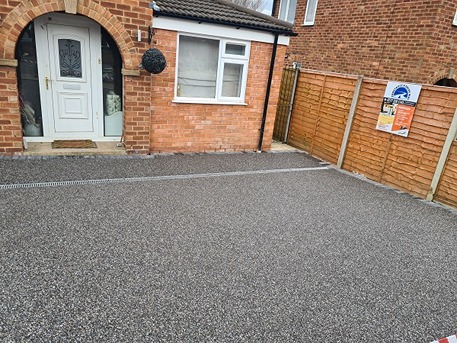
Resin systems can provide an attractive, low-maintenance finish, but their repair needs differ. Resin bound surfacing is a smooth, porous blend of aggregate and resin, while resin bonded finishes use aggregate scattered onto a resin layer. Local repairs can be possible, but the repaired area may remain slightly visible because aggregate blends weather over time.
Before any resin repair, the underlying base must be dry, stable and free from significant cracks. If the base is moving, the resin surface will eventually show the same problem. In some situations, preparing and resurfacing a wider area produces the more consistent result.
Concrete repairs depend heavily on the depth and cause of cracking. Minor surface defects may be repaired and refinished, but major movement or multiple cracks can make replacement the better long-term option. Pattern-imprinted concrete can be particularly difficult to patch invisibly because its colour, release pattern and texture must be carefully matched.
An experienced contractor will be honest about this trade-off. A local repair may restore safety and prevent further deterioration, even if it cannot make an aged surface look completely new.
Driveway repairs vary widely in scope, so a low figure is only useful if it includes the work needed to make the repair last. Ask for a clear written quotation that states the affected area, excavation depth where required, sub-base work, drainage adjustments, materials, edging, waste removal and final finish.
It is also worth asking whether the contractor expects to find additional issues once the damaged area is opened up. Ground conditions cannot always be confirmed from the surface alone, but an experienced team can explain likely risks and how they would be dealt with. This is more reassuring than receiving a vague price that later grows without a clear reason.
For commercial premises, the discussion should include traffic levels and access. A surface that performs well for two household cars may not be suitable for regular delivery vehicles, wheelie bins, skips or customer parking. The construction depth and material choice should reflect how the area is genuinely used.
Insurance, experience and workmanship matter too. A driveway is a prominent part of the property, and poor repairs can create trip hazards, drainage issues and repeated expense. Choose a contractor willing to inspect the site, explain the proposed method and take responsibility for the full preparation as well as the visible surface.
Repair is usually worthwhile where damage is confined to a small area and the wider driveway remains stable. Relaying a settled patch of block paving, repairing a tarmac pothole or correcting a failed channel drain can protect the rest of the surface and avoid unnecessary disruption.
Replacement becomes more attractive when faults are widespread, drainage is fundamentally wrong or the existing driveway was not built to an adequate depth. It may also be the right opportunity to improve the layout, create an additional parking space, introduce a more suitable material or coordinate the driveway with patios, paths, walling and landscaping.
Leicester Driveway approaches this decision around the condition of the site rather than a one-size-fits-all answer. A tailored recommendation should balance immediate cost with the expected lifespan, the property’s appearance and the likelihood of future repairs.
After repair work is complete, regular care helps protect the investment. Keep drainage channels and gullies clear, remove weeds before roots widen joints and avoid allowing soil or leaves to build up against driveway edges. For block paving, occasional re-sanding of joints may be needed. Tarmac benefits from prompt attention to new damage, especially at edges, while resin surfaces should be kept clear of debris that could reduce their drainage performance.
The most useful next step is a proper site assessment. A clear diagnosis before work begins gives you a repair that looks right at the entrance to your property and performs properly through Leicester’s changing weather. Contact Us to request a tailored quotation and practical advice for your driveway.