How to Plan Driveway Drainage That Lasts
20/11/2026

A driveway rarely fails all at once. It starts with a shallow dip that holds rainwater, a few loose edges by the kerb, or fine cracks that widen after a cold spell. Before long, the entrance to the property looks tired and becomes harder to keep safe and tidy. Professional tarmac driveway resurfacing Leicester homeowners can depend on provides a practical way to restore a worn surface without always needing to rebuild the entire driveway from the ground up.
Tarmac remains one of the most reliable choices for busy homes, rental properties and commercial premises across Leicester. It creates a neat, dark finish, copes well with regular vehicle traffic and can be laid over a properly assessed existing base. The key is not simply adding a new black layer. Lasting results depend on identifying why the old surface has deteriorated, preparing the foundation correctly and ensuring rainwater has somewhere effective to go.
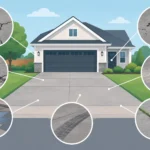
Resurfacing is often suitable when the existing driveway base is stable but the top layer has become worn, uneven or cracked. Traffic, standing water, tree roots, oil spills and years of weather exposure all take their toll on tarmac. Leicester’s wet winters and repeated freeze-thaw conditions can be particularly hard on small cracks, allowing water to reach the lower layers and weaken the surface over time.
Common signs include fading, fretting where loose aggregate appears on the surface, shallow potholes, wheel-rut marks and puddles that remain after rain. Cracks around drainage channels, inspection covers or the driveway edges also need attention before they grow into larger failures. A freshly resurfaced driveway improves the appearance immediately, but its real value is in dealing with these early issues before a more extensive reconstruction is required.
Resurfacing is not the correct answer for every driveway. If the foundation is moving, the surface has widespread deep potholes, or water is regularly washing out the sub-base, the affected area may need to be excavated and rebuilt. A reputable contractor should explain this clearly rather than covering structural problems with a thin surface that will soon crack again.
A durable tarmac finish starts below the surface. The first stage is an on-site assessment of the existing driveway, its levels, drainage and condition around entrances, garage thresholds and adjoining paths. This helps determine whether the job calls for local repairs and an overlay, or more substantial groundwork.
Where resurfacing is appropriate, damaged sections are cut out and repaired before the new layer is laid. Weak edges may be strengthened, and suitable edging is installed or retained to give the tarmac a firm boundary. This matters because unsupported edges are more likely to crumble under turning vehicles or repeated use.
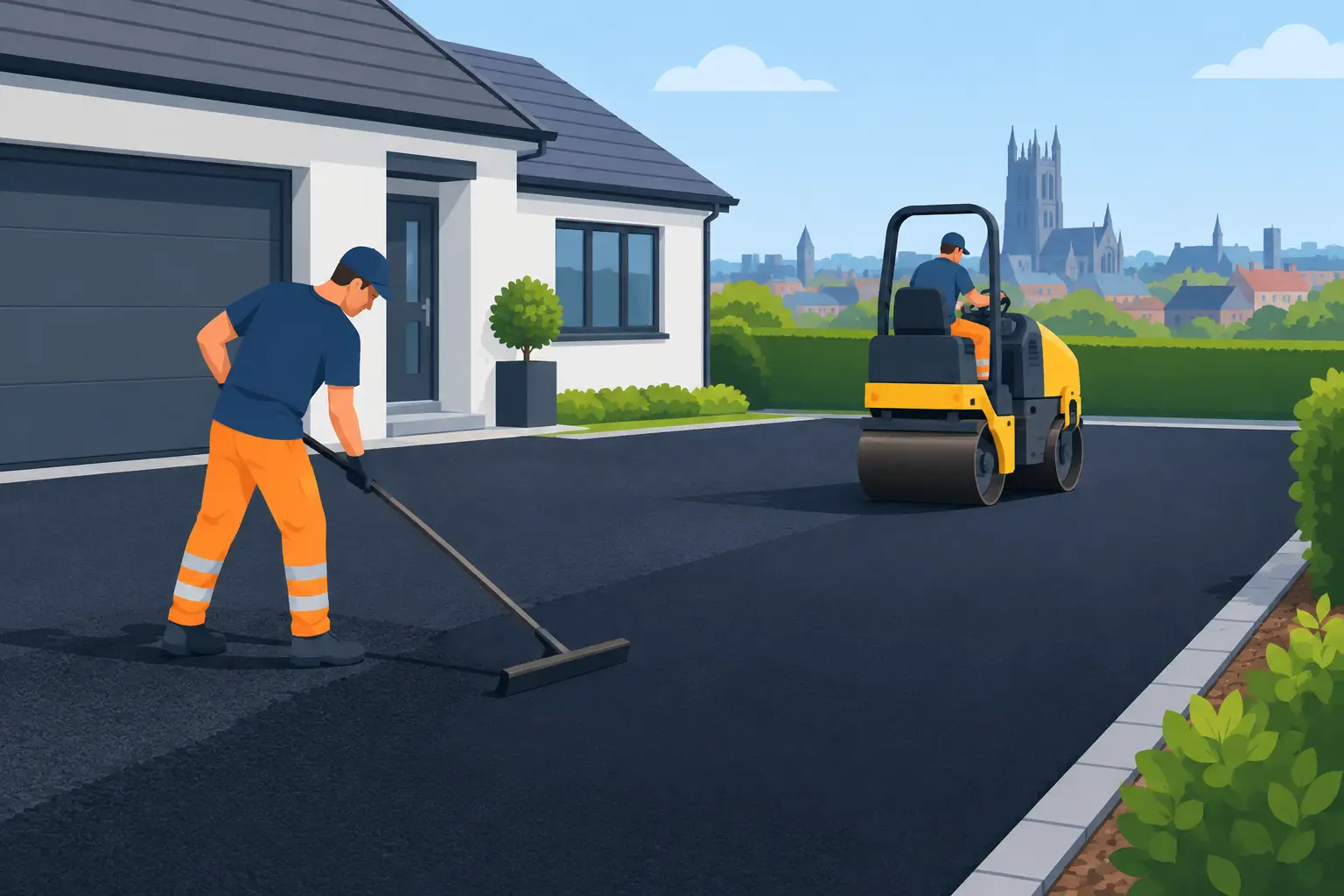
The surface is then cleaned and prepared so the new material can bond correctly. A tack coat may be applied between layers, followed by hot tarmac spread to the required level and compacted using professional equipment. Proper compaction is what gives the driveway its smooth appearance, strength and resistance to water penetration.
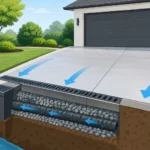
Levels deserve particular care. A driveway should direct water away from the property, not towards a garage, front door or wall. Depending on the layout, this may involve falls across the drive, channel drainage or other drainage measures suited to the site. This is especially important where an existing driveway has settled and now sends water into the wrong place.
For many properties, resurfacing provides a sensible balance between cost, performance and visual improvement. It can extend the useful life of a driveway while avoiding unnecessary excavation where the base remains sound. Tarmac is also quick to lay compared with some individual-unit paving systems, which can reduce disruption around the home or business.
A well-installed surface is easy to maintain. Regular sweeping, prompt removal of oil leaks and attention to drainage help it stay smart for longer. Tarmac’s clean finish works particularly well with brick edging, block-paved borders, walls, gates and planting, so it can be part of a wider front-garden transformation rather than a stand-alone repair.
It is also a practical choice where access is used every day. Tarmac provides a firm, even route for cars, bins, pushchairs and pedestrians, without the individual joints found in block paving. For commercial entrances and shared access areas, the material can be specified to suit heavier use, provided the foundations and drainage are designed accordingly.
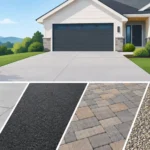
That said, the finish is generally more uniform than decorative paving, resin bound surfacing or natural stone. Homeowners who want a highly patterned entrance may prefer a block-paved border, a decorative apron or a contrasting path alongside the tarmac. The right choice depends on how the driveway is used, the style of the property and the desired level of maintenance.
Poor drainage is one of the main reasons driveways break down prematurely. Water that settles on tarmac can find its way into cracks, soften weaker areas and create damage during frosty weather. It can also cause practical problems around doorways and contribute to standing water on pavements or neighbouring land.
A professional survey considers where rainwater currently runs and how the proposed surface will affect that flow. In some cases, the existing falls can be corrected during resurfacing. In others, channel drains, soakaways or permeable surrounding surfaces may be needed. The appropriate solution depends on the property layout, ground conditions and local drainage requirements.
This is one area where a low quote can prove costly. Simply laying tarmac to make a drive look level may create a surface that holds water or directs it towards the house. Careful setting out and preparation protect both the finish and the property.
Not always. An overlay works best where the present tarmac is broadly stable, with only surface-level wear or localised damage. If there are serious depressions, extensive cracking, loose sub-base material or evidence of ongoing movement, laying new tarmac directly over the top may only hide the issue temporarily.
A thorough contractor will inspect the full driveway rather than judging it from the most visible cracks. They should consider vehicle loads, turning points, access requirements and the condition of the edges. A family driveway used by two cars has different demands from a shared entrance serving several vehicles or a business forecourt receiving regular deliveries.
There can also be level restrictions. Raising the driveway surface may affect damp-proof course clearances, garage access, gates and existing drainage. Where this is a concern, planing or removing sections of the old surface may be necessary to maintain safe, workable levels.
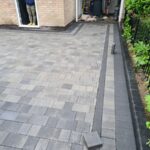
Fresh black tarmac gives a crisp, practical appearance that suits traditional and contemporary homes alike. Edging can make a significant difference to the final presentation. Block paving, granite setts, kerb stones or brick borders provide definition and help integrate the driveway with the property’s exterior character.
For a larger project, resurfacing can be combined with new paths, patio paving, boundary walls, fencing or lawn work. Coordinating these elements at the same time often produces a more considered finish and avoids disturbing a new driveway later for additional groundwork. It also allows drainage and levels to be planned across the whole front or rear exterior space.
Leicester Driveway approaches resurfacing as part of the wider condition and use of the property. The aim is a surface that looks right on completion but also drains properly, withstands daily traffic and remains straightforward to live with.
Once the new surface has been laid, follow the contractor’s advice on when it can be used. Tarmac needs time to cool and settle, and very heavy loads or sharp turns can mark a newly finished surface. Hot weather can also soften tarmac slightly, so care should be taken with motorcycle stands, skips and stationary vehicles during its early life.
Long-term maintenance is uncomplicated. Keep gullies and channel drains clear, sweep away leaves and grit, and deal with fuel or oil spills promptly. If a crack or edge defect develops in future, early repair is far more economical than allowing water into the layers below.
A driveway should make arriving home feel easier, not add another repair job to the list. If your surface is cracked, uneven or holding water, request a professional assessment and quote for a finish built around your property, your drainage needs and the way you use the space.